Admin
October 19, 2026
Fall Protection During Tank, Vessel, and Elevated Equipment Inspections
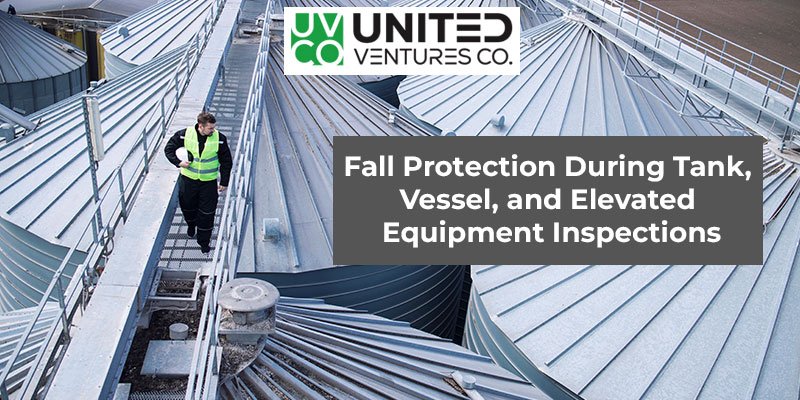
A routine inspection in an industrial unit can identify a small leak, a loose connection, or an early sign of equipment damage. However, when the inspection requires workers to climb a storage tank or access the top of a pressure vessel on an elevated platform, the job brings different challenges.
Most industrial units often operate in spaces with limited access. Surfaces may be slippery, and handhold areas may be limited, but workers need proper safety precautions to perform the task smoothly. That’s why fall protection safety equipment for tank, vessel, and elevated equipment inspection is essential.
For industrial facilities, a reliable harness with a lanyard provides more effective fall protection than an ordinary safety harness. For maintenance managers, safety officers, and procurement teams, the right approach helps ensure inspection work is performed safely in a controlled, supportive workplace.
Let’s explore this blog to understand fall protection strategies for workers during tank, vessel, and elevated equipment inspection work.
Essential Fall Protection Equipment for Industrial Inspection
In this section, we will discuss different types of industrial fall protection equipment that can support industrial workers during tank, vessel, and elevated equipment inspection.
-
Full body harness
A properly fitted full-body harness is a vital component of an industrial fall arrest system. It is designed specifically to distribute forces across appropriate parts of the body when workers are connected to a compatible system.
For inspection workers, selecting the proper full-body harness size, as per the manufacturer’s instructions, and ensuring compatibility with the connecting equipment is essential.
-
Lanyard and self-retracting lifelines
The connection between a harness and an anchorage plays a key role in the overall system. Depending on the task, a suitable lanyard or self-retracting lifeline can help workers stay connected while moving through an inspection area. That’s why, before selecting a full-body harness, consider essential safety checks for workers, potential fall hazards, edge exposure, and compatibility with the intended anchorage. A self-retracting lifeline is designed for leading edge use and may be needed in certain applications.
-
Secure anchorage parts
An effective fall arrest system needs effective anchorage parts that are capable of supporting the external forces involved in arresting a fall. During tank and vessel inspection, workers should not assume that a nearby pipe, handrail, or structural member is a suitable anchor. Select or design anchorage points and lifeline arrangements according to applicable requirements and expected loading.
-
Guardrails, platforms and other collective protection
Guardrails are properly designed for the right access system, and covers for pipe openings can reduce sudden exposure to fall hazards. The right fall prevention equipment depends on the industrial equipment layout, inspection frequency, and site conditions.
For recurring inspections, industrial facilities may benefit from reviewing whether permanent access improvements can reduce the need for repeated work near the exposed edges.
-
Compatible accessories and supporting PPE
As per the inspection site, workers may also need suitable safety helmets, protective footwear, gloves, and other personal protective equipment. Safety harnesses must not interfere with harness fit or the operation of the fall protection system. A properly coordinated equipment selection process can help ensure that individual PPE works together to provide reliable safety protection.
Conclusion
A well-designed industrial fall protection sollution can provide safe access for industrial workers during routine inspection. If your industrial unit needs a reliable, top-notch fall protection system for worker safety, United Ventures can show you the right path.