Admin
July 3, 2026
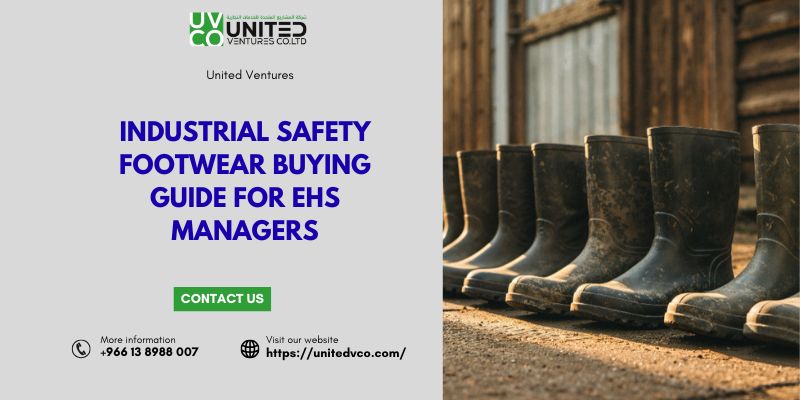
Industrial Safety Footwear Buying Guide for EHS Managers
An environmental, health, and safety (EHS) manager mainly designs and implements organizational safety programmes that ensure workplace safety, maintain regulatory compliance and environmental sustainability. In any industrial plant, an EHS manager is primarily responsible for maintaining worker safety and industrial productivity by preventing certain accidents.
Whether in manufacturing plants, warehouses, construction sites, or heavy-duty industrial environments, workers face several hazards, including the risk of falling, sharp objects, slippery floors, or electrical hazards. For EHS managers, selecting the right industrial safety shoes is not just about purchasing footwear. It is about ensuring a safe workplace, reducing workplace injuries, and boosting employee confidence by implementing the right industrial safety footwear.
In this blog, we will discuss industrial safety footwear buying guidelines to help EHS managers understand key factors before making an investment decision.
Factors EHS Managers Should Consider for Industrial Safety Footwear
In this section, we will discuss the key factors that EHS managers should consider before buying industrial safety footwear.
1. Understand workplace hazards
Before selecting industrial safety footwear, the EHS manager should evaluate the major risk factors present in their workplace. Different industrial units may face different workplace-related risk factors, such as-.
- Manufacturing units may need foot protection against compression hazards.
- Construction sites may need protection from sharp objects and uneven surfaces.
- The chemical environment may need resistance to a chemical spill.
2. Check safety protection features
It is true that not all safety footwear doesnot offers the same type of protection. Look for footwear designs with essential safety features that perfectly match your workers’ requirements.
- Slips and sudden falls mainly occur in industrial workplaces, where workers deal with oil, water, or uneven flooring. In such a case, choosing roadmate shoes with reliable slip-resistant capability can significantly improve your workplace safety.
- In the industrial workplace, where workers may face electrical hazards, choosing appropriate safety footwear with electrical-protective features can help EHS managers enhance worker safety.
- Sometimes workers are exposed to nails, sharp metal objects, and rough surfaces, where puncture-resistant safety footwear can provide an additional layer of protection.
3. Focus on workers’ comfort
Sometimes, EHS managers overlook workers’ comfort when prioritizing safety. Workers need to wear safety footwear for long hours. If shoes are uncomfortable, heavy, or poorly fitting, they may cause discomfort for workers and affect productivity.
Thus, when buying safety footwear, the EHS manager must focus on several factors.
- Comfortable cushioning
- Proper fittings
- Breathable material
- Lightweight design
4. Choosing the right material for safety footwear
When workers perform industrial work, they may face several hazardous environments where durability is non-negotiable for safety footwear. In such a critical situation, if the EHS manager discusses high-quality safety footwear materials to withstand various industrial hazards with safety shoe wholesale suppliers, it can be a great relief for industrial workers.
High-quality materials for safety footwear can withstand several industrial hazards such as-.
- Daily wear and tear
- Rough and uneven surfaces
- Changing weather conditions
- Long working hours
When industrial units invest in durable industrial safety footwear, it can reduce the need for frequent replacements and ensure long-term value.
5. Industry-specific safety requirement
Every workplace has unique safety standards. EHS managers at every industrial plant should select safety footwear in accordance with industrial safety standards and the work environment.
- Warehouse workers mainly need lightweight yet protective safety footwear, such as Ka7 safety shoes, to work safely.
- Heavy industry workers mainly need strong protective features in their footwear.
- Outdoor industrial tasks, such as those in the construction industry, may require weather-resistant footwear design.
The right choice of safety footwear can ensure workers’ safety and maintain productivity, which is essential to running the industrial operation.
Conclusion
Industrial safety footwear plays a vital role in protecting workers in industrial workplaces. For EHS managers, considering key factors when choosing safety footwear is vital to safeguarding industrial brand value and social reputation. If your industrial unit is looking for a reliable foot protection solution that meets industrial safety standards, United Ventures can support you at every step. You can contact us through our website to place your order.