Admin
November 6, 2026
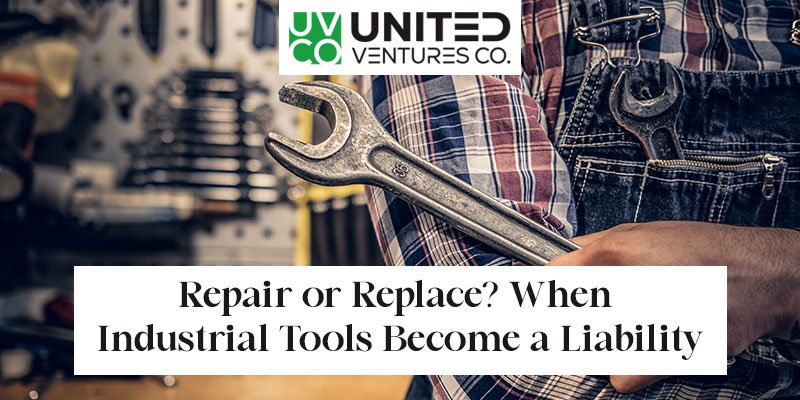
Repair or Replace? When Industrial Tools Become a Liability
Every industrial maintenance team must know that no single piece of industrial equipment lasts forever. It needs repairing several times. A little extra attention or a sudden breakdown of important equipment can force the industrial maintenance team to repair or replace it by adopting top-notch industrial equipment solutions. Sometimes, industrial maintenance teams think using old equipment saves money, since replacing it can be costly.
However, excessive repair bills tell a different story. Repair tasks also cause delays in industrial operations and excessive financial loss. That’s why, when industrial units decide whether to repair or replace equipment, they need a closer look at suitability, reliability, and cost of ownership.
Let’s discuss these facts through this blog.
When Does An Industrial Tool Become a Liability?
An industrial tool doesn’t automatically become a liability. Before it’s completely damaged, an industrial tool shows serious signs you should consider.
-
The same fault keeps recurring
Occasional repairs of industrial equipment are normal. However, repeated repairs may require special investigation. Recurring faults indicate your industrial machinery is using worn components, incorrect accessories, or unsuitable operating conditions.
Before approving the repair task, the industrial maintenance team needs to identify whether previous repairs restored performance. Before replacing equipment, try to clarify essential questions.
-
Spare parts are difficult to obtain
A repair may look affordable until the required component takes several weeks to arrive. For equipment used in critical maintenance tasks, parts availability can be essential to complete the repair.
Industrial maintenance teams need to know whether suitable parts, technical support, and service documentation remain available. If essential components cannot be found, replacement can be a reliable way to keep operations running smoothly.
-
Performance has become unpredictable
A tool cannot stop performing without disrupting operations. It may take longer than before. Operators may need to adjust repeatedly to achieve an acceptable finish. That inconsistency can create extra inspection, wasted materials, and rework. Replacing damaged industrial equipment becomes a consideration when required performance cannot be maintained or restored.
-
Damage raises safety concerns
Cracked housing, damaged cables, missing guards, faulty controls, and hydraulic leaks may need attention through the site’s inspection and maintenance process. Remove any tool with a suspected safety defect from service until an expert assesses it. Repair is only a sensible option when the equipment can be properly restored and verified for use.
-
Workload has outgrown the tool
Industrial operations change over time: production increases, materials become more complex, and the maintenance team needs to handle different jobs differently. A tool selected for occasional use may struggle to meet demand.
Repeated overloading or overheating must be addressed through both equipment selection and working practices. That’s why, before buying or replacing any damaged industrial tool, understanding the actual application, operating environment, and power source becomes a critical step.
-
Workers have started working around the problem
Sometimes the clearest warning comes from the workers who use the equipment. Workers understand when to stop using equipment and when to start using it. These comments deserve attention.
Operators may notice declining performance due to damaged industrial equipment. Proper investigation of damaged tools indicates whether they need repairing or replacement. Professional industrial equipment solutions in Saudi Arabia can guide you in deciding between repair and replacement.
Frequently Asked Questions
-
How do I know whether an industrial tool needs repair or replacement?
A: A review of condition, fault history, performance, and total operating cost measurement can identify whether an industrial tool needs repair or replacement.
-
Should industrial tools be replaced after a fixed number of years
A: By considering the usage, maintenance, operating condition, and inspection findings, the industrial maintenance team decides when a damaged industrial tool needs proper replacement.
-
Can preventive maintenance delay tool replacement?
A: Appropriate maintenance can help preserve performance and identify developing faults. It cannot make an unsuitable, irreparably damaged, or unsupported tool fit for continued use.
-
What information should I include in an industrial tool quotation request?
A: It mainly includes the application, required specifications, quantities, and preferred brands where relevant, and the expected delivery date.
Conclusion
Whether it is about replacing or repairing industrial tools, the maintenance team makes the right decision after a thorough investigation. If your industrial unit is looking for top-notch industrial equipment to replace old units, United Ventures can be the right choice.